Semi Commercial Water Filter
Semi Commercial Water Filter Price in Pakistan
A semi commercial water filter sits between a household unit and a full commercial plant. These are slim-housing systems built for places where more people are drinking the water than a standard 10-inch domestic filter can comfortably serve — but where a commercial installation would be more than you need.
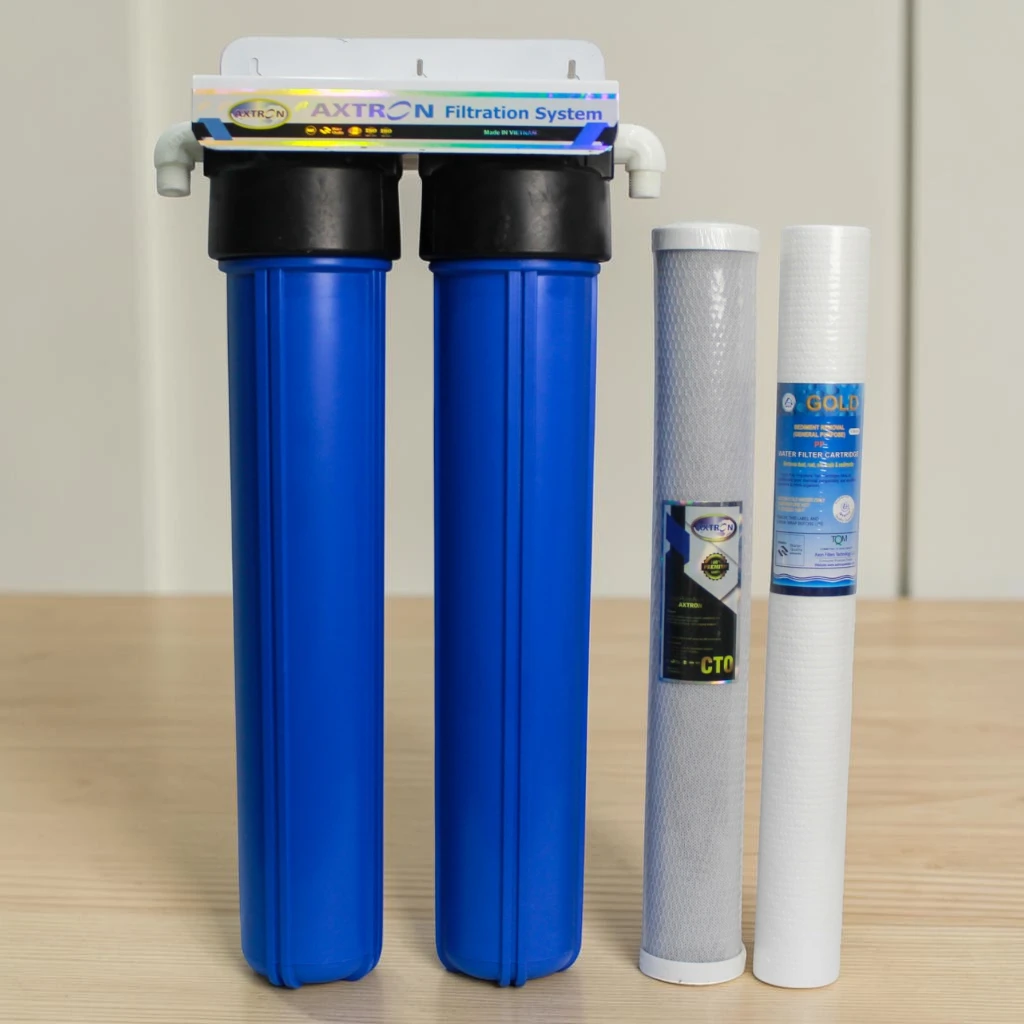
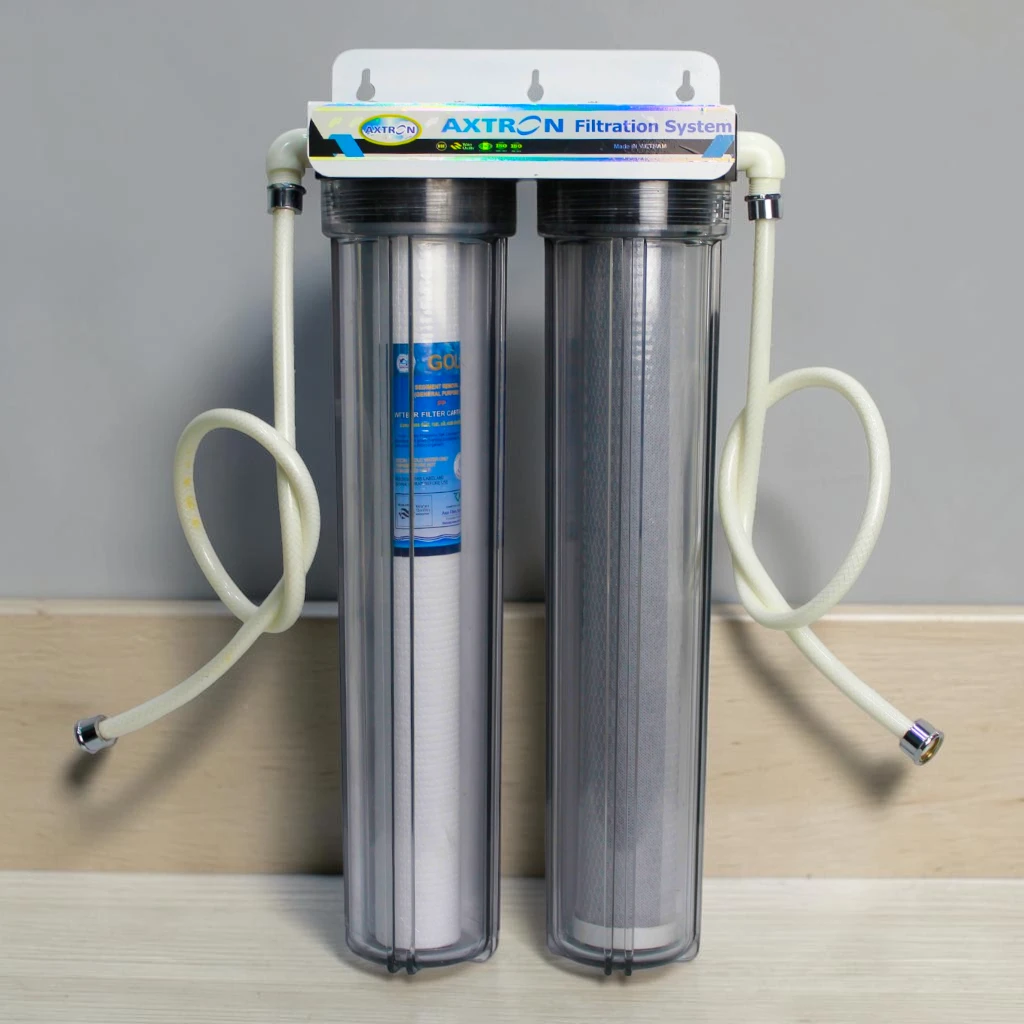
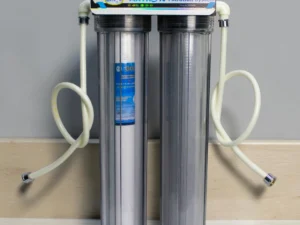
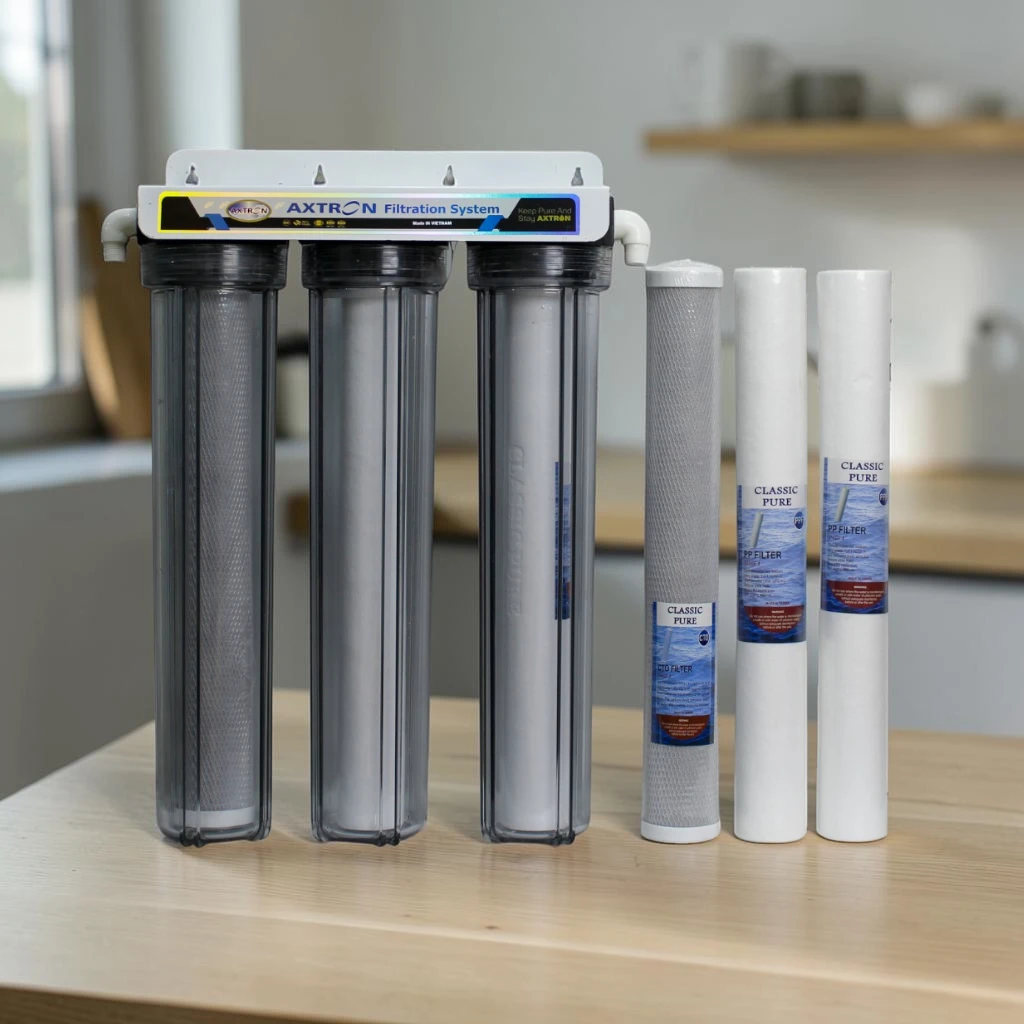
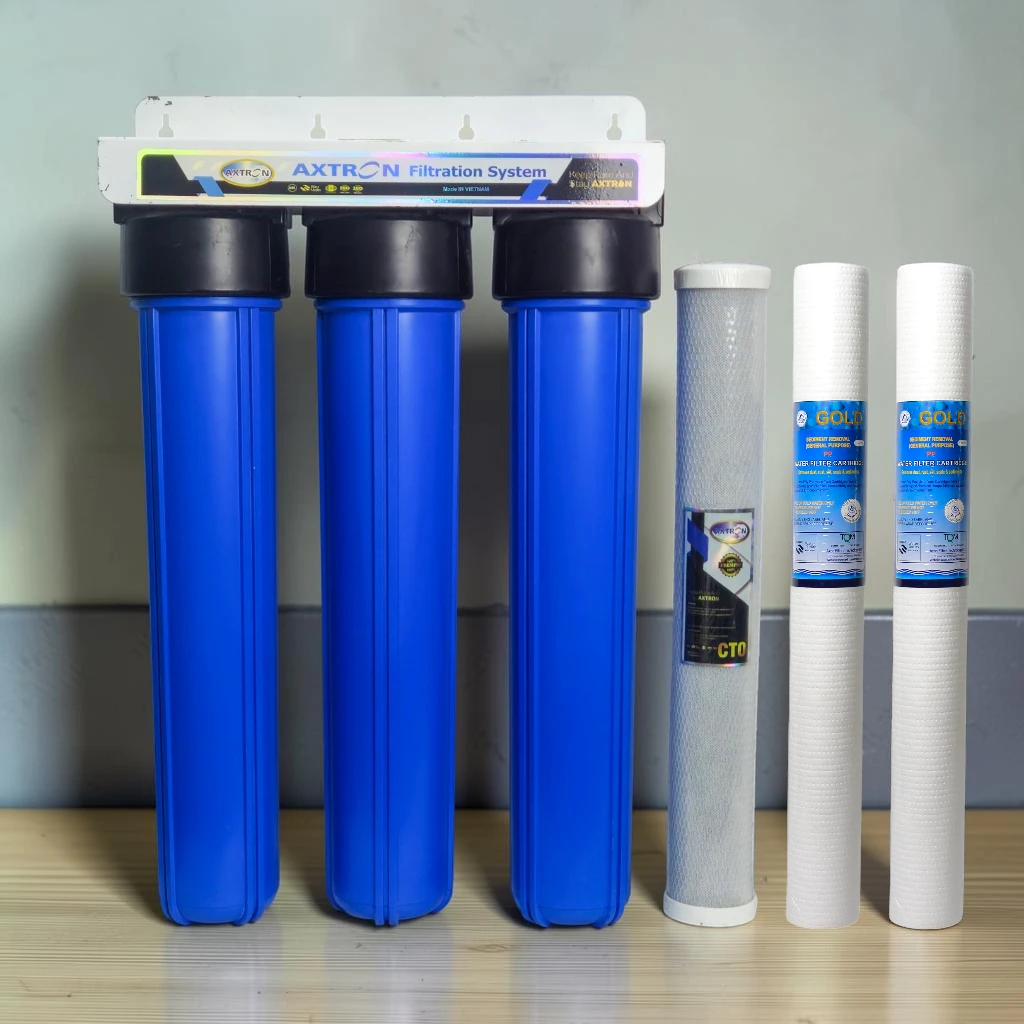
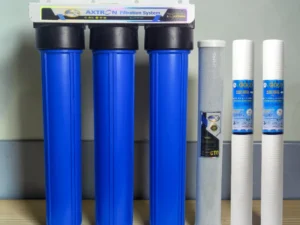
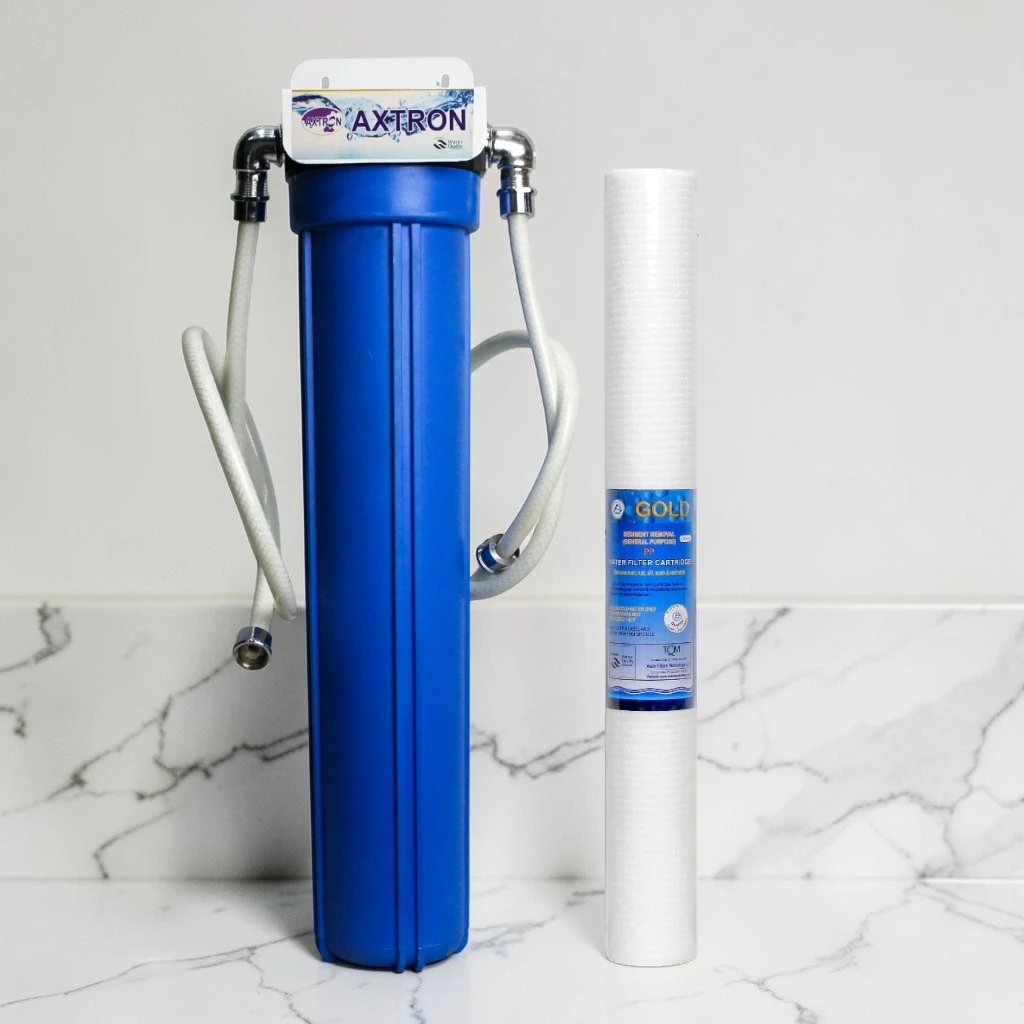
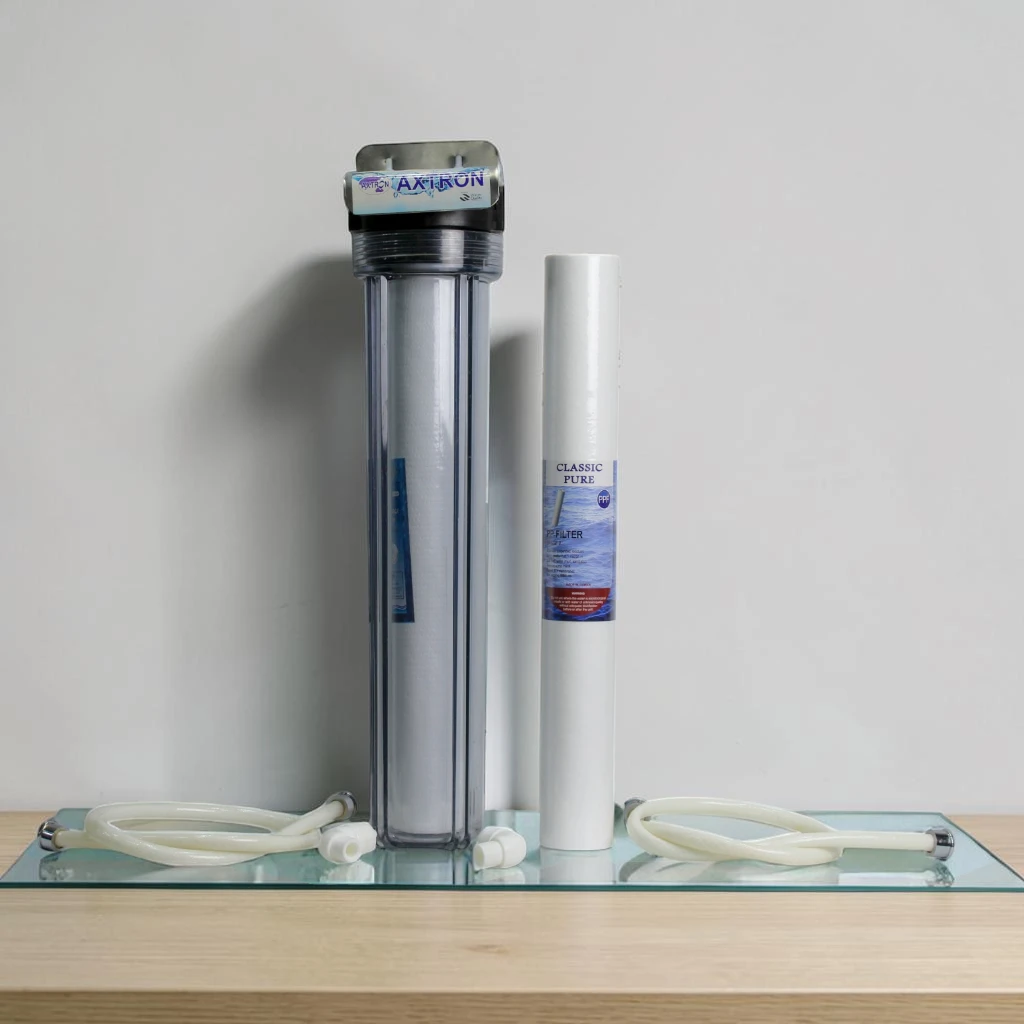
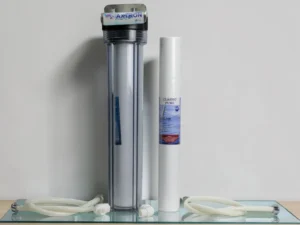
Axtron Pakistan has supplied water filtration equipment across the country since 2005. This category covers our single, dual and triple-stage slim filters, including 20-inch housings, for restaurants, hotels, masjids, small factories, shops, market units and large households.
Semi Commercial Water Filter Price in Pakistan
| System | Price |
|---|---|
| Single Stage Slim Water Filter (Blue) | Rs. 6,499 |
| Single Stage Slim 20 Inch Water Filter | Rs. 8,000 |
| 2 Stage Slim Water Filter | Rs. 10,999 |
| 2 Stage Slim Water Filter (Crystal Housing) | Rs. 13,999 |
| 3 Stage Slim Water Filter | Rs. 14,999 |
| 3 Stage Slim 20 Inch Water Filter | Rs. 19,499 |
All prices include complete fittings. Cash on delivery available nationwide.
Do You Need a Semi Commercial Filter?
The honest way to answer this is by how many people drink the water, not by the type of building.
A standard 10-inch domestic filter suits a family of roughly 5 to 8 people. That is what it is designed for and where it performs well.
A semi commercial slim filter is the right choice when 10 to 20 people are drinking from the same point every day. In practice that means small restaurants and hotels, masjids, small factories, shops, market units, and larger households where a domestic unit is being pushed past what it was built for.
If you are running a domestic 10-inch filter for a shop or a masjid and finding you replace cartridges constantly, that is the system telling you it is undersized. Moving to a slim housing solves it.
Slim or Jumbo?
Both are larger than a domestic 10-inch filter, and the difference is output and the scale of premises they serve.
Slim filters — the systems on this page. Right for around 10 to 20 people drinking daily: restaurants, hotels, masjids, shops, market units, small factories and large households.
Jumbo filters — a considerably higher-output system using 20-inch big blue housings. Right for whole-house filtration on larger properties (10 marla and above), large madrassas, schools and colleges, police lines, large offices and factories.
If your premises is bigger than the examples above, or you want to filter the whole building’s main line rather than a single drinking point, our commercial water filters are the correct range.
If you are unsure which side of that line you fall on, message us on WhatsApp with your premises and daily usage. We would rather size it correctly than sell you something too small.
Why We Don’t Quote Output in Litres
You will see competitors advertise a litres-per-hour figure for non-electric filters. We do not, because for this type of system that number is not meaningful.
A non-electric filter runs on whatever pressure reaches it, and the output depends entirely on how you use it. Open the tap fully and more water comes through, but it has had less time inside the housing to be filtered. Open it slowly and less comes through, but it is properly processed. The water needs time in the housings to be cleaned — there is no fixed rate the filter controls.
So rather than quoting a number that changes with your tap, we ask about your actual usage and recommend accordingly. Tell us how many people, what kind of premises, and how the water is drawn, and we will match a system to it.
Filter Stages
Slim and 20-inch systems use the same stage configurations as our domestic filters — only the housing size changes.
PPF + PPF + CTO for water carrying heavy sediment. Two sediment stages in series, the second finer than the first, followed by a compressed carbon block for chlorine, taste and odour.
PPF + GAC + CTO for clearer supply with a taste or smell problem. One sediment stage, then granular carbon for bulk chlorine removal, then a carbon block to polish.
Choose the double-sediment build if your water is visibly dirty. Choose the carbon build if it looks clear but smells or tastes wrong.
Important: Use Normal Tank Pressure
This matters more on semi commercial systems than domestic ones, because the temptation to speed things up is greater.
Run the filter on normal pressure from your overhead tank. Do not connect it directly to a water pump line or any high-pressure supply. Water forced through the housings at high pressure passes too quickly to be properly filtered — you get more water out, but it has not been cleaned.
The filtration happens while the water sits in the housings. Speed defeats it. If your setup pushes high pressure through the line, fit the filter downstream of the tank rather than off the pump.
Cartridge Replacement
Cartridge life is the same as on our domestic systems.
PPF sediment cartridges — 15 to 30 days, depending on how much dust and sediment your water carries. The housings are visible, so check them. When the PPF looks fully dirty, change it immediately. A clogged sediment stage stops protecting the carbon behind it, and the carbon then wears out early.
GAC and CTO carbon cartridges — 3 months maximum. Once carbon is exhausted it can release what it has collected back into the water, which is why an overdue cartridge causes a smell.
On a commercial premises this is worth putting on a schedule rather than leaving to memory. Replacement cartridges are available from our semi commercial filters and cartridges section.
If the System Has Been Left Unused
Filters left standing fail two ways. If water sat in the housings, it goes stagnant and develops a smell that carries into everything drawn afterwards. If the housings were left empty, the cartridges dry out and stop filtering properly even though they look fine.
In both cases, remove all cartridges and fit new ones before restarting. This applies particularly to seasonal premises and shops that close for extended periods — before a long closure, open the housings and take the cartridges out.
Delivery and Installation
Nationwide delivery with cash on delivery available. Our Lahore, Multan and Bahawalpur offices can advise on installation and sizing.
For bulk, dealer or multi-unit enquiries, contact us on WhatsApp or call +92 302 163 5555.
Frequently Asked Questions
What is a semi commercial water filter?
It is a larger-capacity filter for places where more people drink the water than a domestic unit is designed for. A 10-inch domestic filter suits a family of 5 to 8. A semi commercial slim filter suits around 10 to 20 people drinking daily — restaurants, masjids, shops, small factories and large households.
How many litres per hour does it produce?
There is no fixed figure for a non-electric filter. Output depends on your line pressure and how far you open the tap, and running it fast means the water spends less time being filtered. Rather than quote a number that changes with usage, we ask about your requirement and recommend a system to match.
What is the difference between slim and jumbo water filters?
Output and scale. Slim systems suit a single drinking point serving roughly 10 to 20 people — restaurants, masjids, shops, small factories. Jumbo systems use 20-inch big blue housings, produce considerably more, and are built for whole-house filtration on larger properties, big madrassas, schools, colleges, police lines and large factories. Jumbo units sit in our commercial water filter range.
Can I connect it directly to my water pump?
No. Run it on normal pressure from your overhead tank. High pressure from a pump line pushes water through too fast to be properly filtered — you get volume without cleaning. Install downstream of the tank.
How often do cartridges need changing?
PPF sediment cartridges every 15 to 30 days depending on your water. GAC and CTO carbon cartridges up to 3 months. Same intervals as domestic systems — the housing size does not change cartridge life.
Why does the water smell?
Either the carbon cartridge is exhausted, or water sat in the housings during a period without use and went stagnant. Both need new cartridges. Check the PPF as well, since a clogged sediment stage usually wears the carbon out early.
Does this remove TDS?
No. Sediment and carbon filtration improves clarity, taste and odour but does not reduce dissolved salts. If your water is salty or brackish you need reverse osmosis — see our semi commercial RO plants.