Domestic Water Filter
Domestic Water Filter Price in Pakistan
A domestic water filter is the simplest way to improve the water your family drinks and cooks with every day. These systems connect directly to your existing supply line and remove sediment, rust, sand, chlorine, bad taste and odour before the water reaches your tap — no electricity, no drainage line, and no running cost beyond cartridge replacement.
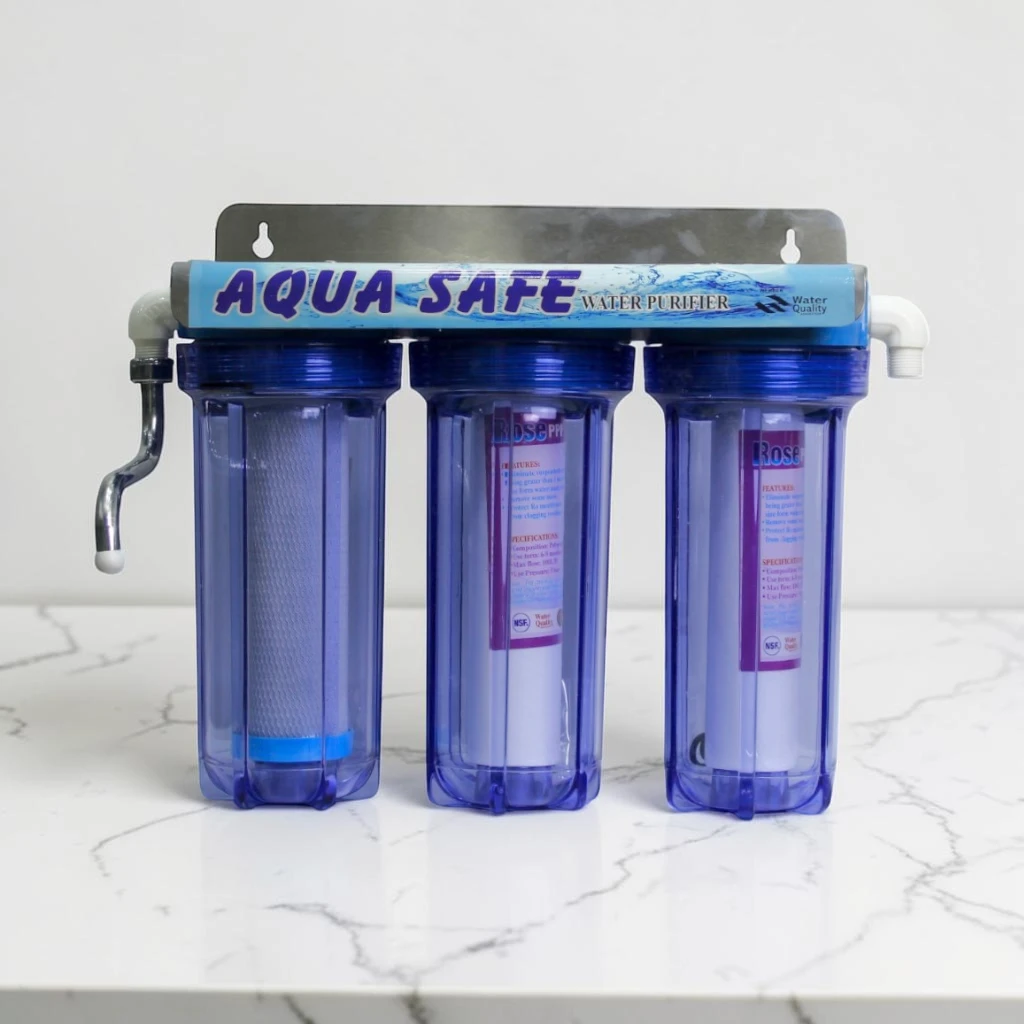
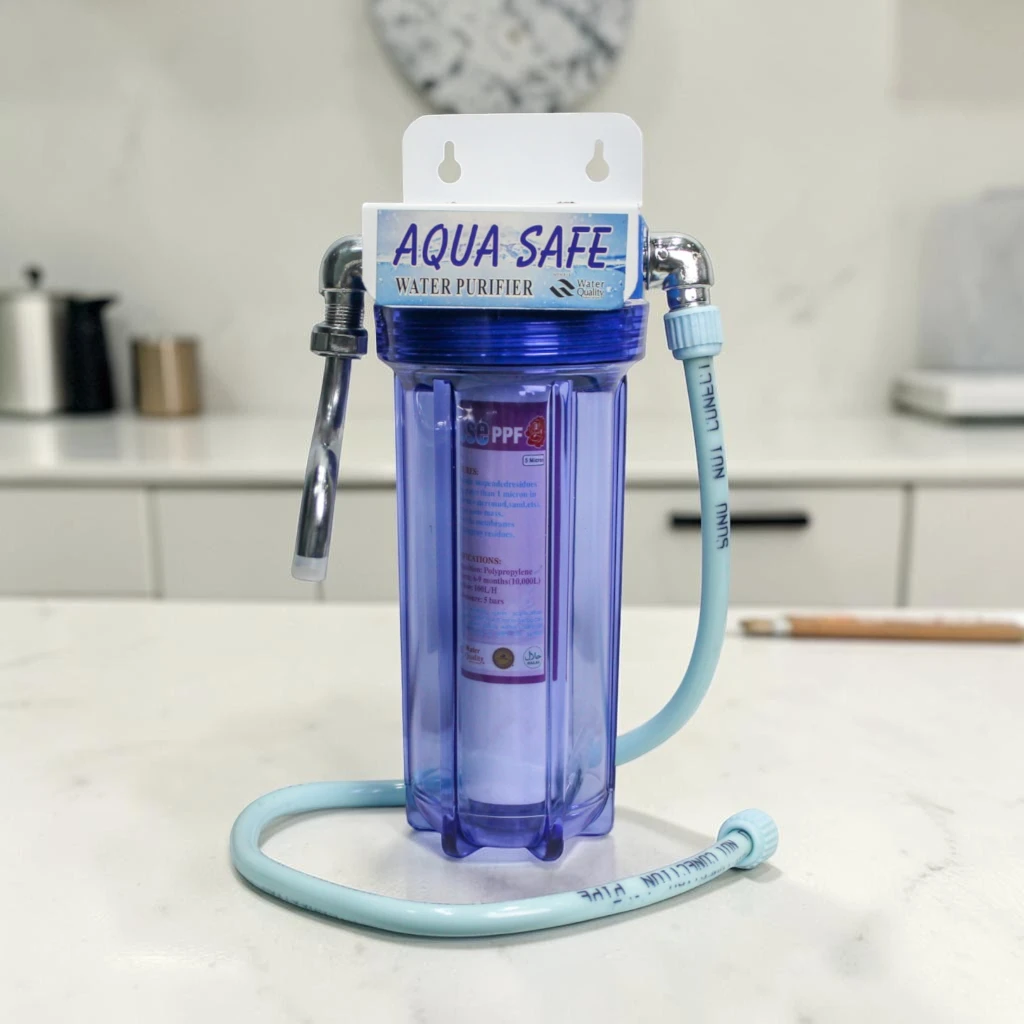
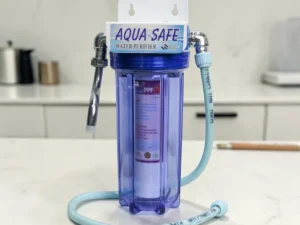
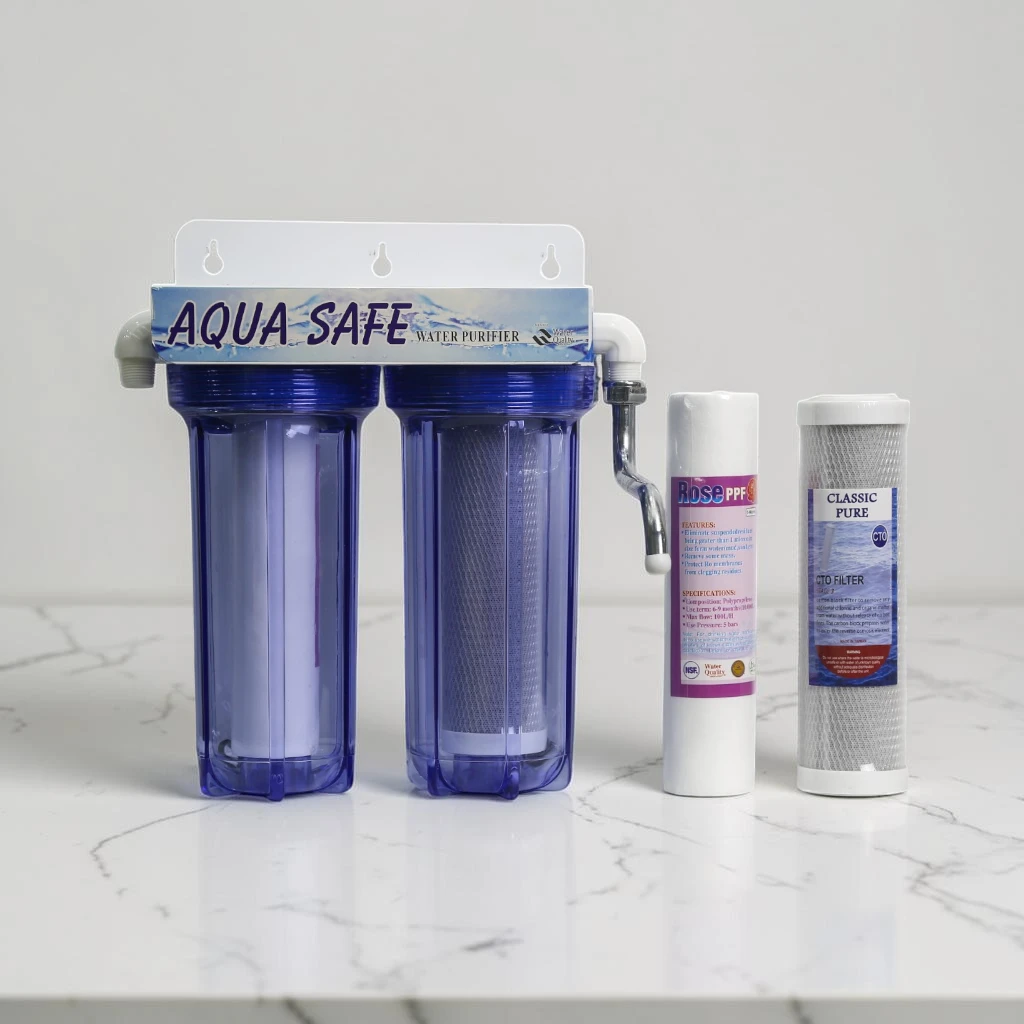
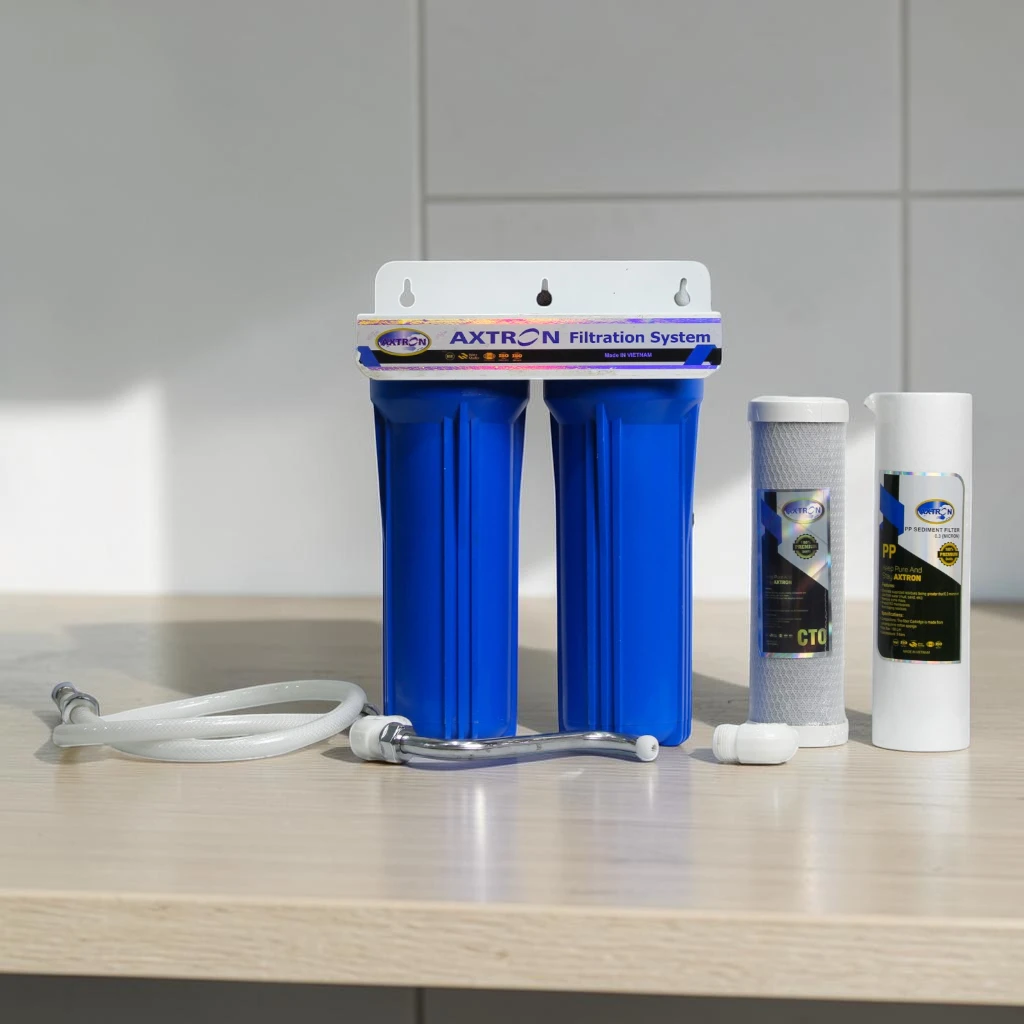
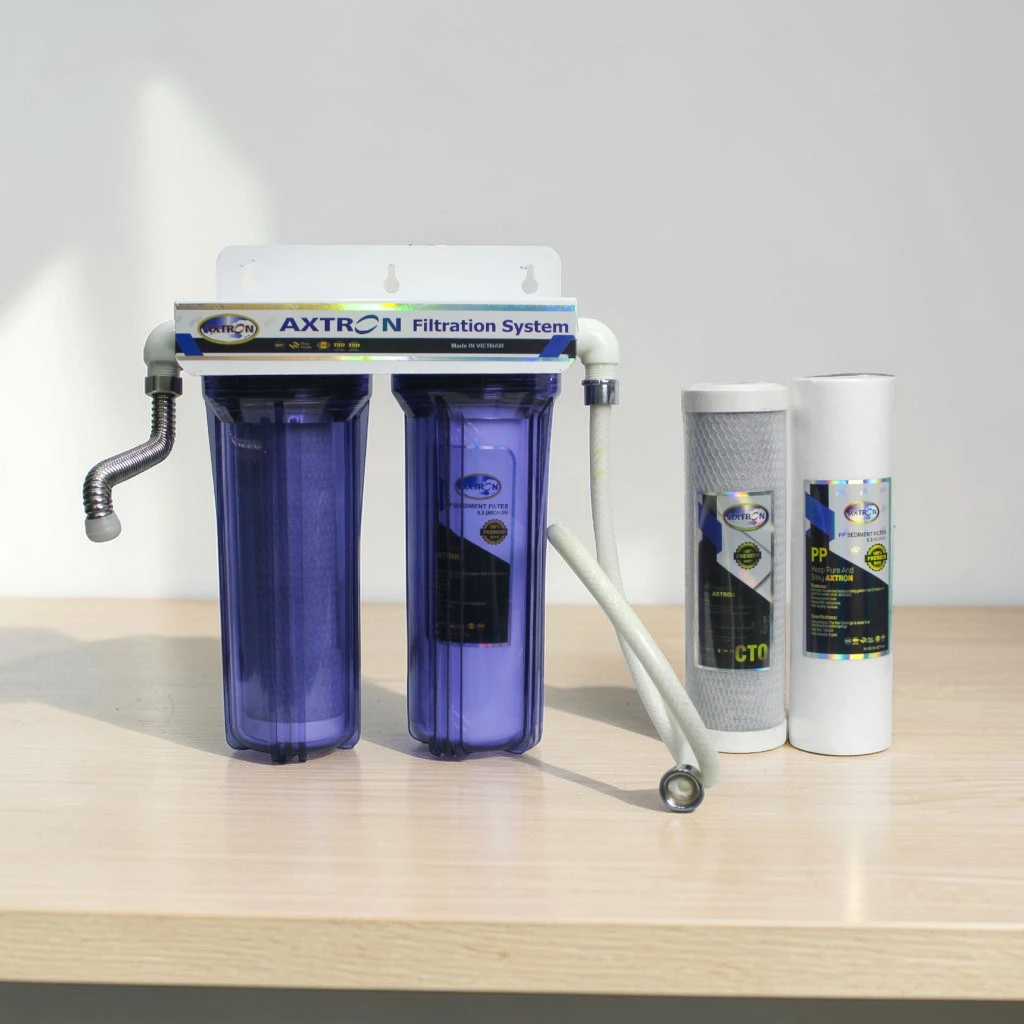
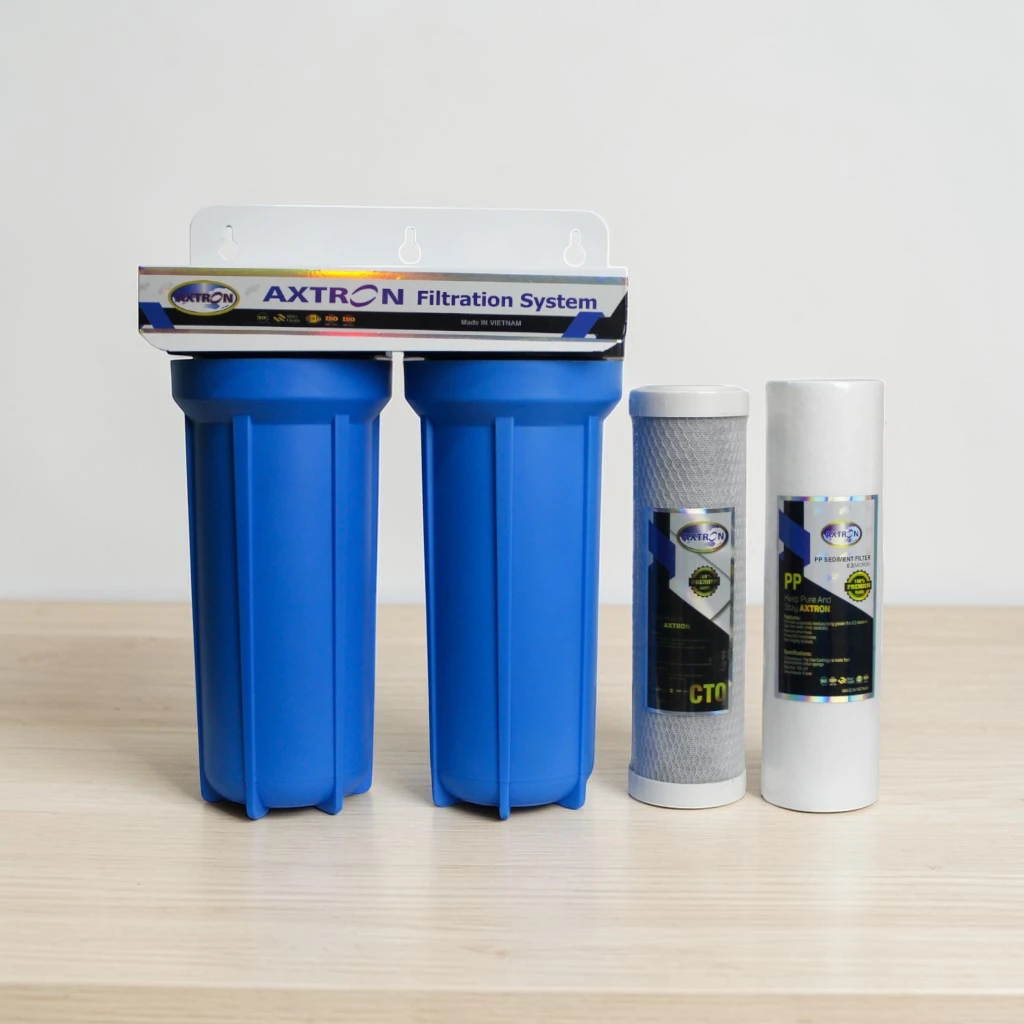
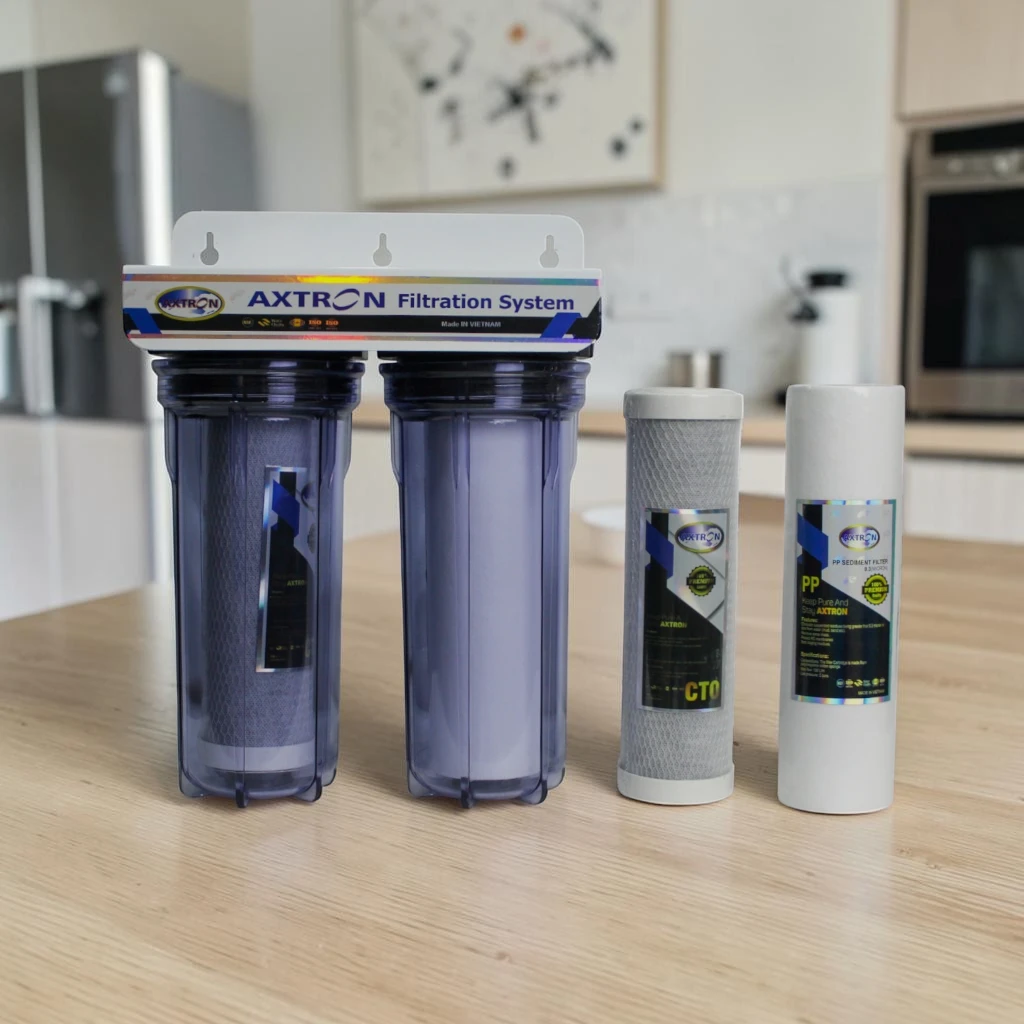
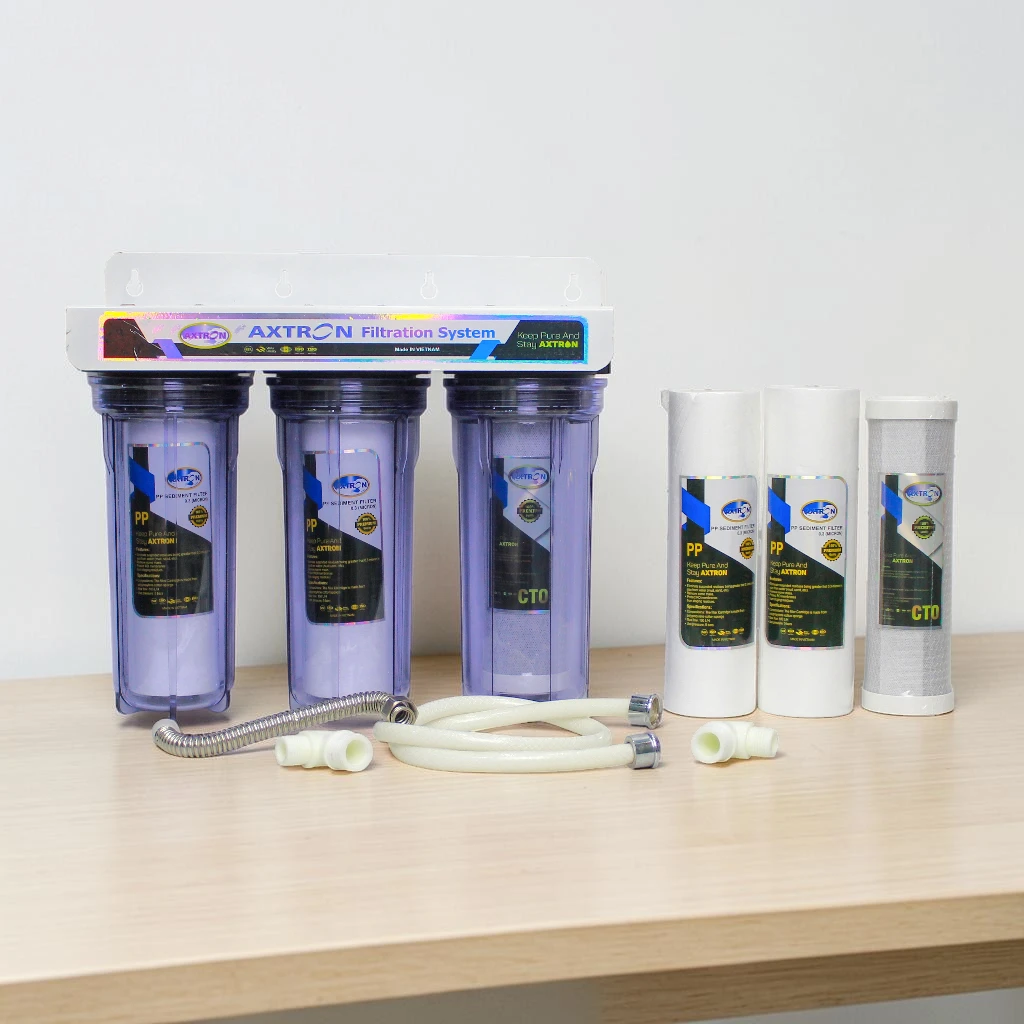
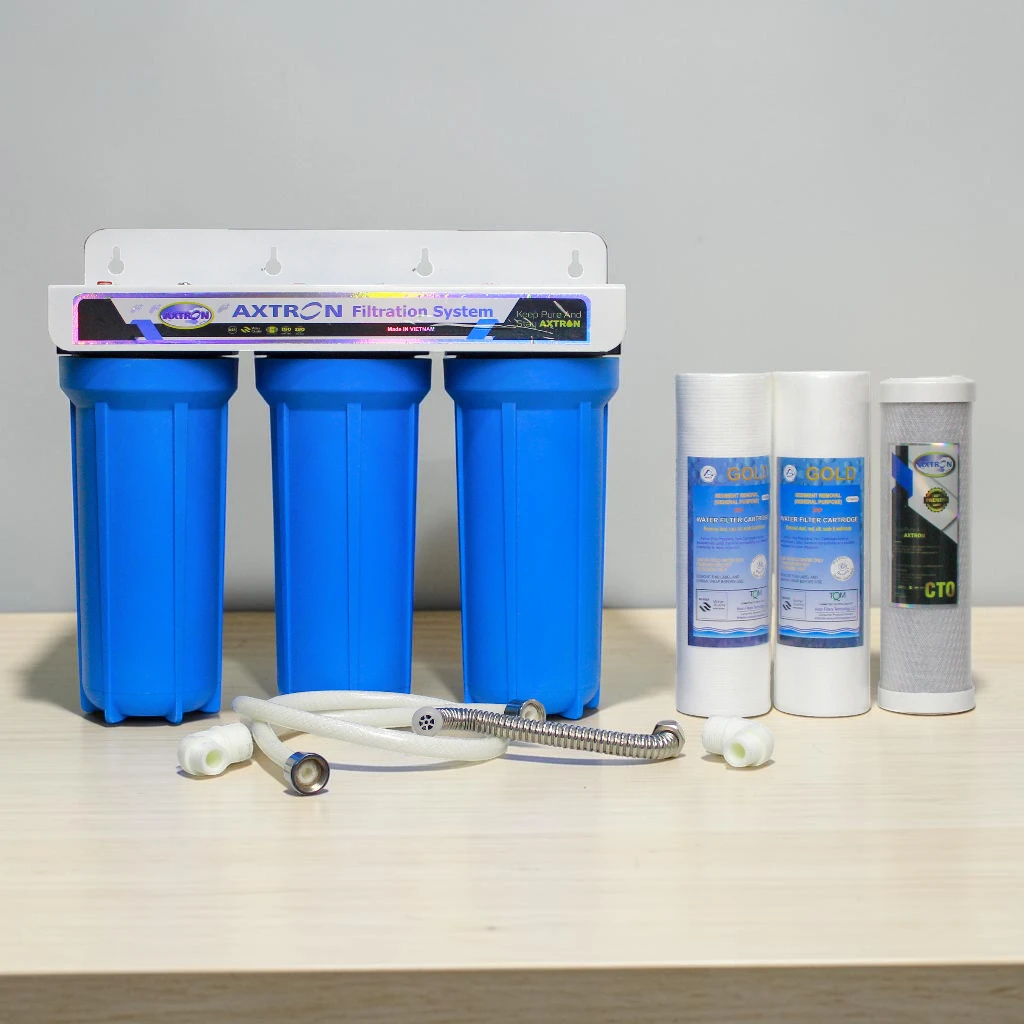
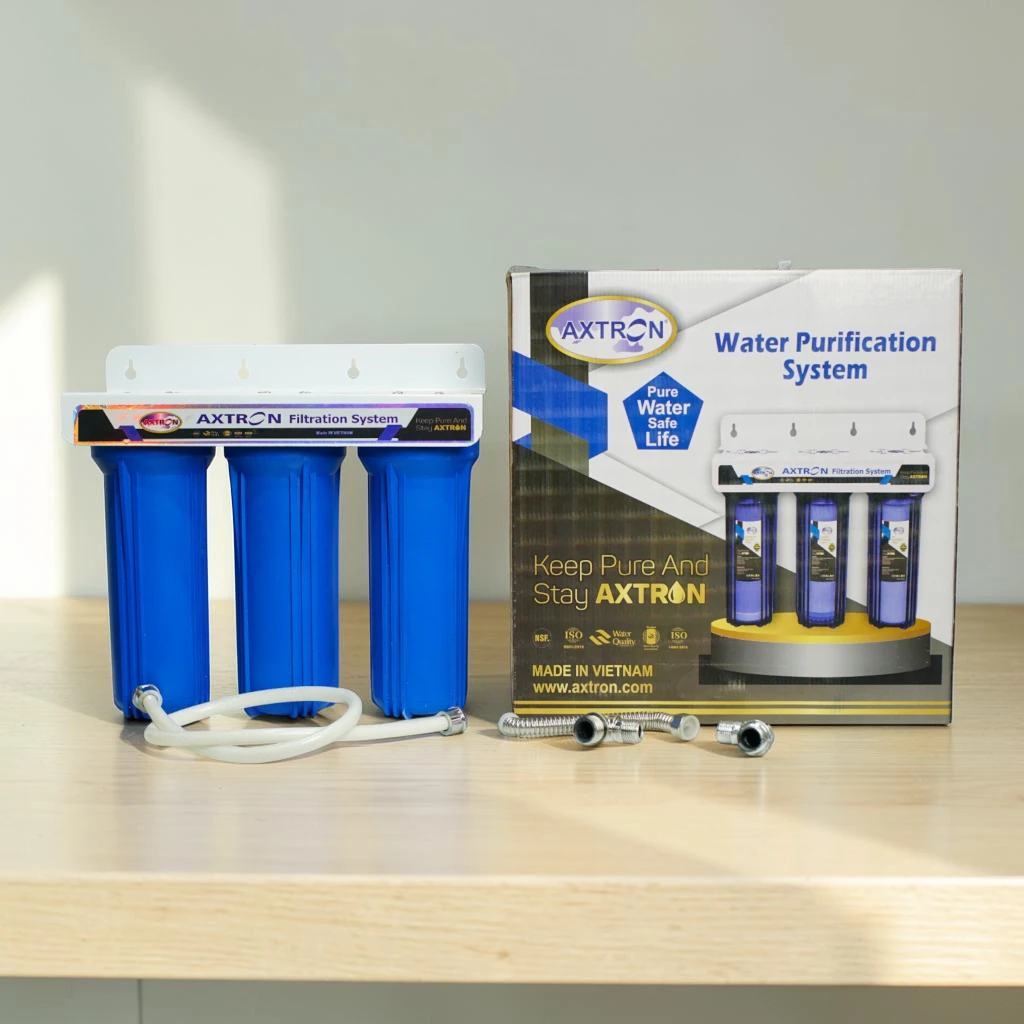
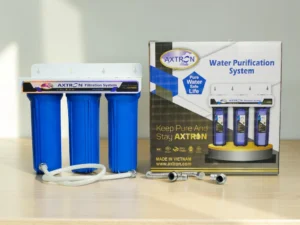
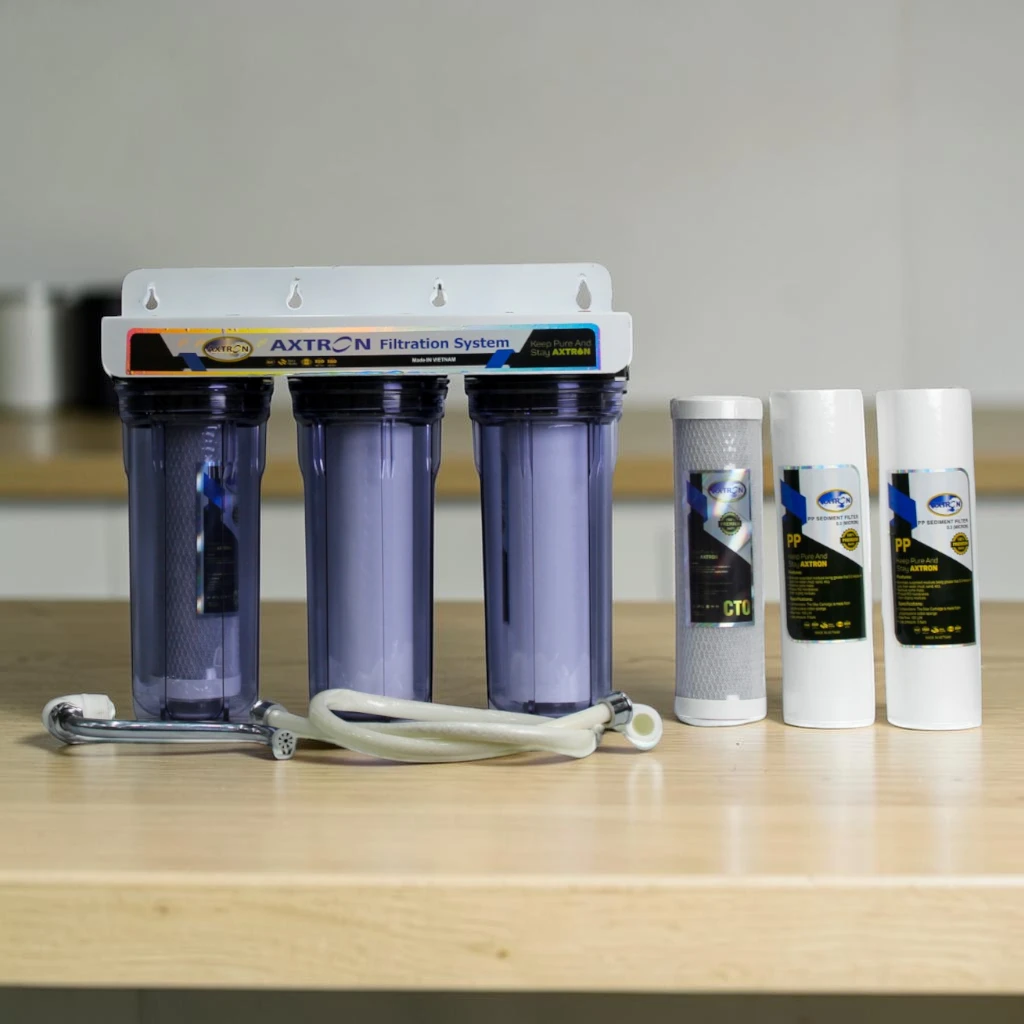
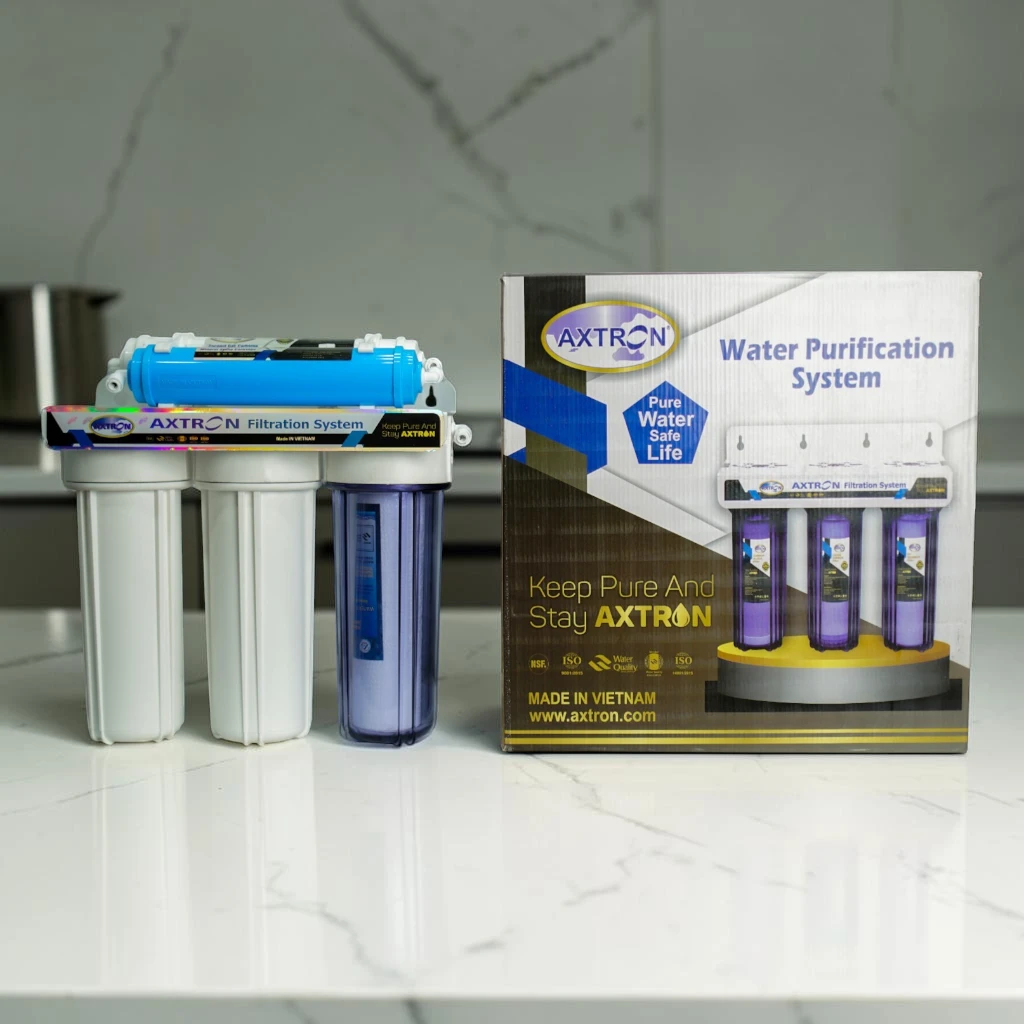
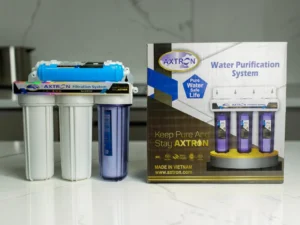
Axtron Pakistan has supplied water filtration equipment across Pakistan since 2005. This category covers our single, dual, triple and five-stage domestic filters for homes, apartments, kitchens, hostels and small offices.
Water Filter Price in Pakistan
| System | Price |
|---|---|
| Single Stage Water Filter (10″) | Rs. 2,500 |
| 2 Stage Water Filter | Rs. 5,000 – Rs. 6,000 |
| 3 Stage Water Filter | Rs. 7,500 – Rs. 8,000 |
| 5 Stage Water Filter | Rs. 10,000 |
All prices include complete fittings and piping. Cash on delivery available nationwide.
How a 3 Stage Water Filter Works
Not every 3 stage filter uses the same cartridges. The two configurations below are the ones commonly supplied in Pakistan, and which one suits you depends on how much sediment your incoming water carries.
Configuration A — PPF + PPF + CTO
Built for water carrying heavy sediment, such as boring water or supply drawn from an underground tank.
Stage 1 — PPF Sediment Filter. Removes the coarse material: sand, silt, visible dirt and rust particles.
Stage 2 — PPF Sediment Filter. A second, finer sediment cartridge that catches what the first stage let through. Running two sediment stages in series keeps the carbon cartridge from clogging early, so the whole system lasts longer on dirty water.
Stage 3 — CTO Carbon Block. Compressed activated carbon that reduces chlorine, chemical residue, bad taste and odour, while also acting as a fine final filter.
Configuration B — PPF + GAC + CTO
Built for municipal or tanker supply, where the water is reasonably clear but has a chlorine smell or a taste problem.
Stage 1 — PPF Sediment Filter. Removes dirt, sand, silt and rust before anything reaches the carbon stages.
Stage 2 — GAC Granular Activated Carbon. Loose carbon granules with high flow, handling the bulk of the chlorine and odour removal.
Stage 3 — CTO Carbon Block. Compressed carbon that polishes the taste and traps finer particles the earlier stages missed.
Which configuration should you choose? If your water is visibly dirty, cloudy, or leaves sediment in a glass, go with the double-sediment build. If it looks clear but smells of chlorine or tastes unpleasant, go with the carbon-focused build. If you are unsure, send us a photo or a message on WhatsApp and we will tell you which one fits your supply.
Do You Need a Water Filter or an RO Plant?
This is the question worth getting right before you spend money, so we will be direct about it.
A sediment-and-carbon water filter does not reduce TDS. If your water is salty or brackish — common with boring water in parts of Punjab and Sindh — a 3 stage filter will improve clarity and taste but will not lower the dissolved salts. For that you need reverse osmosis.
Choose a domestic water filter if your water is municipal supply or tanker water, your main complaints are dirt, rust, chlorine smell or bad taste, and you want low running cost with no electricity.
Choose a domestic RO plant if your water is boring or brackish, tastes salty, or your TDS meter reads above roughly 500 ppm.
If you are unsure, test your water with a TDS meter first, or send us a WhatsApp message and we will help you decide. We would rather point you to the right system than sell you the wrong one.
Which Filter Suits Your Water?
- Municipal supply water — a 2 or 3 stage filter is usually enough
- Underground tank or tanker water — 3 stage with double sediment recommended
- Visibly dirty or high-sediment supply — consider a 20″ jumbo whole-house filter on the main line instead
- Salty or brackish boring water — RO is required, not a sediment filter
Cartridge Replacement and Running Cost
Cartridge life depends far more on your water than on the calendar. These are the intervals we see in practice across Pakistan.
PPF sediment cartridges — 15 to 30 days. This is much shorter than most people expect. On heavily silted supply it can be closer to 15 days; on cleaner municipal water it may reach a month.
Do not wait for a date. The PPF is visible through the housing, so check it. When it looks fully dirty, change it immediately. A clogged sediment cartridge stops protecting the stages behind it, and the carbon cartridges start taking a load they were never meant to handle. Changing the PPF on time is the cheapest thing you can do to extend the life of the more expensive cartridges.
GAC and CTO carbon cartridges — 3 months maximum. Carbon has a finite capacity. Once it is exhausted it does not simply stop working — it can begin releasing what it has collected back into your water, which is why an overdue carbon cartridge often causes a smell. If your filtered water develops an odour, the carbon stage is finished regardless of how long it has been installed.
Usage patterns change everything. High sediment with low daily usage, or clean water with heavy daily usage, will both shorten cartridge life for different reasons. Judge by condition, not by the calendar.
If Your Filter Has Not Been Used for a While
This is one of the most common reasons a working filter starts producing bad water, and almost nobody warns customers about it.
If water was left standing in the housings. Water that sits inside the housings for many days goes stagnant. It develops a smell, and that smell carries into everything you draw afterwards. Flushing the system does not fix it — the cartridges themselves have been sitting in stagnant water and have to go.
If the housings were left empty. Cartridges that dry out cannot work properly again. Once the filter media has dried, it does not recover when water returns, and the system will not filter as it should even though everything looks normal.
In both cases, remove all the cartridges and fit new ones before using the system again. Do not attempt to reuse them.
Before any long period away, whether that is travel, a house left closed, or a seasonal property, open the housings and take the cartridges out. Leave the housings empty and dry. It takes a few minutes and saves you a full set of cartridges when you return.
How to Get the Best Results From a Non-Electric Filter
A non-electric water filter works on your existing line pressure, and how you open the tap makes a real difference to the result.
Run the water slowly. Opening the tap fully pushes water through the housings too fast for the cartridges to do their job. The water needs time inside the housing to be properly processed — particularly at the carbon stage, where contact time is what removes chlorine and odour. A slow, steady flow gives noticeably cleaner water than a fast one from the same filter. If you are filling a bottle or a cooler, let it fill gently rather than at full pressure. This costs nothing and improves your results immediately.
Check the PPF regularly. Because the housing is visible, you can see the sediment cartridge discolouring. Make a habit of glancing at it. Catching a clogged PPF early protects everything downstream.
Use the system regularly. A filter in daily use stays in far better condition than one that sits idle for weeks between uses.
Delivery and Installation
We deliver nationwide with cash on delivery available. Our offices in Lahore, Multan and Bahawalpur can advise on installation, and every filter ships with the fittings and piping needed for a standard wall-mounted or under-sink setup.
For bulk or dealer enquiries, contact us on WhatsApp or call +92 302 163 5555.
Frequently Asked Questions
Does a 3 stage water filter reduce TDS?
No. A sediment and carbon filter improves clarity, taste and odour but does not remove dissolved salts, so your TDS reading will stay roughly the same. Only reverse osmosis reduces TDS.
How often should I change the cartridges?
PPF sediment cartridges usually need changing every 15 to 30 days, depending on how much dust and sediment your water carries. Check the cartridge visually and replace it as soon as it looks fully dirty. GAC and CTO carbon cartridges last up to 3 months.
Why does my filtered water smell?
There are two common causes. The carbon cartridge may be exhausted — once GAC or CTO carbon reaches capacity it stops holding what it has absorbed and an odour appears. Or water may have been left standing in the housings for several days without use, which turns it stagnant. In either case the cartridges need replacing, and you should also check the PPF, since a clogged sediment cartridge is usually what wore the carbon out early.
My filter was unused for a long time. Can I still use it?
No, not with the old cartridges. If water sat in the housings it has gone stagnant and the cartridges will carry that smell. If the housings were empty, the cartridges have dried out and will no longer filter properly. Remove all the cartridges and fit new ones before using the system again.
What should I do with my filter before travelling?
Open the housings and remove all the cartridges, then leave the housings empty. This prevents both stagnant water and dried-out media, and means you only need to fit fresh cartridges when you return rather than replacing a ruined set.
What is the difference between a 2 stage and 3 stage water filter?
A 2 stage system runs one sediment cartridge followed by one carbon cartridge. It handles basic dirt removal and improves taste, and it is the cheapest option that does both. A 3 stage system adds a third cartridge — either a second sediment stage for dirtier water, or a second carbon stage for better taste and odour removal. In practice this means longer cartridge life and better performance, which is why 3 stage is the most common choice for Pakistani homes.
Do these water filters need electricity?
No. All filters in this category run on your existing line pressure, so they keep working during load shedding. For best results, open the tap slowly rather than at full pressure.
Can I install a water filter myself?
Yes. Every filter includes the required fittings and piping, and most customers install them on a kitchen wall or under the sink with basic tools. Our teams in Lahore, Multan and Bahawalpur can advise if you get stuck.
Which water filter is best for boring water?
If your boring water is dirty or sandy but not salty, a 3 stage filter with double sediment will handle it. If it tastes salty, you need an RO plant instead — a sediment filter will not fix salinity.