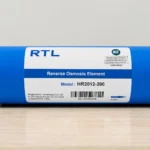
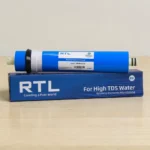
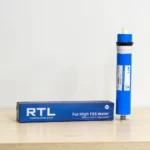
RTL 200 GPD RO Membrane – High Output for Large Home, Office & Community Use
There comes a point in every growing household, busy office, or active community centre where the RO plant simply cannot produce enough clean water to meet daily demand. The storage tank runs empty before the evening meal. The office water cooler goes dry by 2pm. The community filling point has a queue before noon. If this sounds familiar, the problem is almost certainly not your RO plant — it is your membrane's GPD rating.
The RTL HR2012-200 solves this by doubling your daily purified water output. At 200 GPD, it produces approximately 757 litres of purified water per day — twice what a standard 100 GPD membrane delivers and 66% more than a 120 GPD element. This single upgrade, without replacing your entire RO unit, can eliminate the water shortage problem that has been building in your home, office, or community space.
200 GPD = approximately 757 litres of purified water per day. That is enough for a large family of 12–15 people, a small office of 30–40 staff, or a community RO filling point serving 10–15 cans daily.
Understanding the Jump from 100 GPD to 200 GPD
Many buyers ask: why not just buy a second 100 GPD RO plant? The answer is simple — one high-capacity membrane in an upgraded or appropriately sized housing is more efficient, more cost-effective, and easier to maintain than running two separate systems. The RTL HR2012-200 gives you double the output from a single installation point.
| Comparison | 100 GPD (HR1812-100) | 200 GPD (HR2012-200) |
| Daily output (estimated) | ~380 litres | ~757 litres |
| Element format | 1812 (1.8" × 12") | 2012 (2.0" × 12") |
| Ideal for | Standard family home (4–6 people) | Large family, office, community use |
| Salt rejection | 99% | 99% |
| Max feed TDS | 5000 ppm | 5000 ppm |
| NSF/ANSI 58 certified | Yes | Yes |
| Price | Rs. 4,000 | Rs. 6,500 |
COMPATIBILITY CHECK: The RTL HR2012-200 uses the 2012 element format (2.0 inch × 12 inch). It fits 200 GPD RO systems with a 2012 membrane housing. It will NOT fit standard 100 GPD RO plants with 1812 housings. Always check your membrane housing size before ordering. Contact Axtron Pakistan via WhatsApp with your RO plant model if unsure.
The High TDS Advantage — Built for Pakistan's Water Reality
Like all RTL HR series membranes, the HR2012-200 carries the High Rejection designation — meaning it is engineered to maintain 99% salt rejection even when the feed water TDS is extremely high. This matters across Pakistan's most challenging water supply areas:
Multan, Bahawalpur, Lodhran:
Groundwater TDS commonly 1200–2500 ppm. Standard 200 GPD membranes from uncertified brands lose rejection efficiency and lifespan rapidly at these levels. The RTL HR2012-200 handles this with rated capacity to spare — up to 5000 ppm.
Karachi, Hyderabad, Sukkur:
Urban water supply mixed with high mineral bore water in many areas. 200 GPD offices and community points in these cities need a membrane that performs consistently under variable feed water quality.
Faisalabad, Sheikhupura, Gujranwala:
Industrial belt cities with elevated EC and mineral content in water supply. The HR2012-200's consistent 99% rejection protects output water quality regardless of input variation.
Islamabad, Lahore, Rawalpindi:
Better source water quality but high water consumption volumes in offices and commercial buildings make 200 GPD the practical minimum for workplace installations.
Key Features of the RTL HR2012-200
- 200 GPD High Output — Approximately 757 litres of purified water per day. Eliminates water shortage in large households, offices, mosques, and small commercial settings that have outgrown domestic RO membranes.
- NSF/ANSI Standard 58 Certified — Independently tested and certified by NSF International. No other 200 GPD membrane in Pakistan at this price point carries this certification. Materials are verified safe for drinking water contact.
- 99% Salt Rejection — Removes 99% of dissolved salts, heavy metals, arsenic, fluoride, chlorides, and nitrates. Output water TDS will be 90–99% lower than your feed water under standard operating conditions.
- High TDS Capability Up to 5000 ppm — HR series engineering maintains full performance even in Pakistan's hardest water areas. No efficiency drop at high TDS unlike standard budget membranes.
- 2012 Format Element (2.0" × 12") — Designed for 200 GPD RO systems with 2012 housing. The larger 2.0 inch diameter element provides greater membrane surface area for higher flow rate and sustained output volume.
- Thin-Film Composite (TFC) Polyamide Element — Professional-grade membrane technology with superior rejection stability and service life compared to lower-cost membrane types.
- RTL Professional Manufacturing — Produced by Ningbo RXHL Technology Co., Ltd., a nationally certified high-tech manufacturer with 30+ patents and NSF international certification. The same company behind Pakistan's most trusted 100 GPD and 120 GPD RTL membranes.
- Includes O-Ring Seals — Two black O-ring seals included with the element for leak-free housing installation.
Real-World Daily Output Guide for Pakistan Users
The figures below are estimates based on standard test conditions (25°C, 65 psi). Actual output varies with water temperature, pressure, and feed water TDS. Pakistan's summer temperatures increase output slightly; winter temperatures reduce it slightly.
Use Case Daily Need (est.) 200 GPD Sufficient? Recommendation Family of 4–6 150–200 litres/day Yes — with large margin 100 GPD is enough; 200 GPD if high TDS Family of 10–15 350–500 litres/day Yes — comfortable 200 GPD is the correct choice Office 20–40 staff 400–600 litres/day Yes — sufficient 200 GPD recommended minimum Small café / food use 300–500 litres/day Yes 200 GPD handles cooking + drinking Mosque (daily + Juma) 500–800 litres/day Borderline — depends on storage 200 GPD + larger storage tank recommended Community filling point 800–1500 litres/day Partially Consider 300–400 GPD for filling points Step-by-Step Installation Guide
Step 1: Completely shut off the feed water supply line to your RO system. Open the RO drinking water faucet to fully release system pressure before touching any housing.
Step 2: Locate the membrane housing — the largest cylindrical canister in your RO unit. For a 200 GPD system, this is a 2012-format housing (2.0 inch internal diameter).
Step 3: Use a membrane housing wrench to unscrew and remove the housing cap. Pull out the old membrane element and set aside for disposal.
Step 4: Remove the RTL HR2012-200 from its packaging. Inspect the two black O-ring seals at the end cap — confirm they are seated correctly in their grooves. Lightly wet the O-rings with clean water before installation.
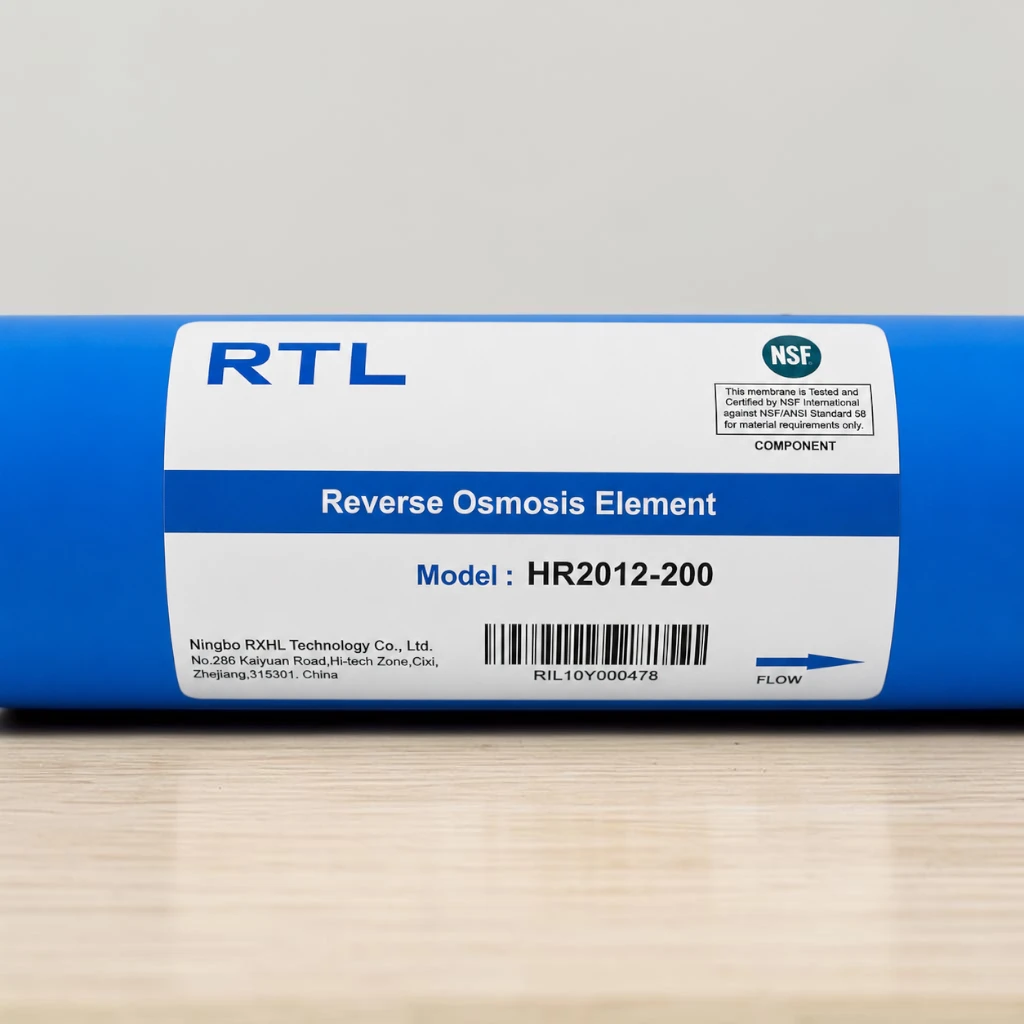
Step 5: Insert the new membrane into the housing following the FLOW direction arrow on the RTL label. The brine end (single port) inserts first into the housing.
Step 6: Firmly replace and tighten the housing cap by hand first, then secure with the housing wrench. Restore feed water supply slowly and check all housing connections for any signs of leaking.
Step 7: Allow the system to run for 30–60 minutes before consuming the output water. Discard this initial flush — it clears storage preservatives from the new membrane element.
Professional installation recommended for 200 GPD and above systems, especially if upgrading from a smaller membrane size. Housing sizes differ and connection fittings may need checking. Axtron Pakistan offers installation support — contact us before ordering if you are unsure.
RTL HR2012-200 Technical Specifications
Specification Detail Brand RTL (Ningbo RXHL Technology Co., Ltd.) Model Number HR2012-200 Series HR — High Rejection for High TDS Water Membrane Type Thin-Film Composite (TFC) Polyamide Rated Capacity 200 GPD / approx. 757 litres per day Salt Rejection Rate 99% (tested at 500 ppm NaCl, 65 psi, 25°C) Maximum Feed TDS Up to 5000 ppm Element Format 2012 — 2.0 inch diameter × 12 inch length Housing Compatibility 2012 membrane housing (200 GPD RO systems) NSF Certification NSF/ANSI Standard 58 — Certified by NSF International Includes Membrane element + 2 × O-ring seals Manufacturer Ningbo RXHL Technology Co., Ltd., Zhejiang, China Price Rs. 6,500 Delivery Nationwide COD — all cities Pakistan Frequently Asked Questions
Q: My current 100 GPD RO plant is not making enough water. Can I just replace the membrane with this 200 GPD one?
A: Not directly — the membrane housing size must match. Most standard 100 GPD RO plants use a 1812-format housing (1.8 inch diameter). The HR2012-200 is a 2012-format element (2.0 inch diameter) and will not physically fit a 1812 housing. To use a 200 GPD membrane, your RO plant must be rated at 200 GPD with a 2012 housing, or the housing needs to be upgraded. Contact Axtron Pakistan for advice before ordering — we can guide you on whether your system can be upgraded or whether a new 200 GPD unit is the better option.
Q: How much more water does 200 GPD actually produce compared to 100 GPD in real daily use?
A: Under standard conditions, a 100 GPD membrane produces approximately 380 litres per day and a 200 GPD membrane produces approximately 757 litres per day. In real Pakistan use — with summer heat increasing output and winter cold reducing it slightly — you will typically see 300–450 litres from a 100 GPD system and 600–900 litres from a 200 GPD system depending on your water temperature, pressure, and feed water TDS. The practical difference for a large family or small office is that the storage tank stays consistently full throughout the day.
Q: Can this membrane handle Multan bore water which sometimes reads above 1500 ppm TDS?
A: Yes. The RTL HR2012-200 is rated for feed water TDS up to 5000 ppm — a rating that covers every city in Pakistan including the most challenging groundwater in Multan, Bahawalpur, D.G. Khan, and Sukkur. At 1500 ppm feed water, the 99% rejection rate means your output water will read approximately 15 ppm, which is excellent quality for drinking water.
Q: What is the difference between the RTL 200 GPD and the Filmtech 200 GPD membrane also available at Axtron?
A: Both are high-quality 200 GPD membranes suitable for Pakistan's water conditions. The RTL HR2012-200 carries NSF/ANSI Standard 58 certification and is part of the HR high-rejection series specifically engineered for high TDS feed water. Filmtech is one of the most globally recognised membrane brands with decades of commercial membrane manufacturing experience. Both are excellent choices — the RTL is the right pick for very high TDS water conditions and if NSF certification is a priority; Filmtech is the right choice if brand reputation and global track record are the deciding factors. Axtron stocks both — contact us if you need help choosing.
Q: How often should a 200 GPD RO membrane be replaced?
A: Typically every 12–18 months in Pakistan's high TDS water conditions. The most accurate replacement indicator is monthly TDS monitoring of your output water. If output TDS rises above 50 ppm or your rejection rate drops below 90% of the original baseline, the membrane is due for replacement. In lower TDS areas like Islamabad or northern Punjab, the membrane may last 18–24 months. Use an Axtron TDS meter to check monthly — it takes under 30 seconds and protects your water quality and membrane investment.
Q: Is 200 GPD enough for a community water filling point?
A: For a small community filling point serving 8–12 cans per day (20-litre cans), 200 GPD is borderline — possible if you have adequate storage tank capacity and production runs overnight. For filling points serving 15+ cans daily, the RTL 300 GPD or 400 GPD membranes from Axtron Pakistan are the more appropriate choice. Contact us to discuss your filling point volume and we will recommend the correct capacity.