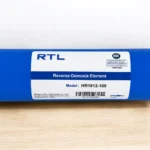
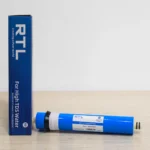
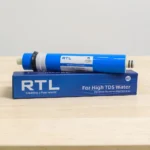
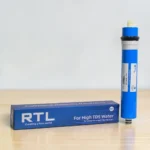
RTL 100 GPD RO Membrane — The RO Membrane Built for Pakistan's Toughest Water
Pakistan has a water problem that most RO membranes were not designed to handle. In cities like Multan, Bahawalpur, Dera Ghazi Khan, and large parts of Sindh, groundwater TDS regularly exceeds 1000 ppm. In some areas of southern Punjab, TDS levels above 2000–3000 ppm are common. Standard RO membranes rated for 500–1000 ppm TDS struggle under these conditions — they produce less pure water, wear out faster, and deliver lower rejection rates over time.
The RTL HR1812-100 is designed specifically for this challenge. The HR designation stands for High Rejection — a thin-film composite polyamide membrane engineered to handle high TDS feed water up to 5000 ppm while maintaining 99% salt rejection and consistent output volume. It is the same technology used in RTL's industrial and commercial membrane lines, adapted into a 1812-format element for domestic 100 GPD RO plants.
RTL is a professional membrane manufacturer established in 2016, certified by NSF International, and recognised by China's national government as a high-tech enterprise. The HR1812-100 is tested and certified against NSF/ANSI Standard 58 — the international benchmark for RO membrane performance and material safety for drinking water applications.
What is NSF/ANSI Standard 58 and Why Does It Matter?
NSF International is an independent global organisation that tests and certifies water treatment products for safety and performance. NSF/ANSI Standard 58 is the specific standard covering point-of-use reverse osmosis drinking water treatment systems.
When an RO membrane carries NSF/ANSI 58 certification, it means:
- The membrane materials have been tested and confirmed safe for contact with drinking water — no harmful chemicals leach into your purified water.
- The performance claims (GPD output, rejection rate) have been independently verified under controlled test conditions — not just manufacturer claims.
- The product meets international quality and safety standards accepted by health authorities worldwide.
Most cheap RO membranes sold in Pakistan — especially unbranded ones from local markets — do not carry this certification. Buying an NSF-certified membrane like the RTL HR1812-100 means you know exactly what you are getting, and what your family is drinking.
Is This the Right Membrane for Your RO Plant?
The RTL HR1812-100 fits standard domestic 100 GPD RO plants with a 1812-size membrane housing. Before purchasing, confirm the following:
| Check | What to Look For |
| Your RO plant's GPD rating | Must be 100 GPD. Check the sticker or manual on your existing RO plant. |
| Your membrane housing size | The '1812' in the model refers to the membrane element dimensions: 1.8 inches diameter × 12 inches length. This is the standard size for most domestic home RO plants in Pakistan. |
| Your water's TDS level | Ideal for input TDS up to 5000 ppm. Use a TDS meter to check your feed water. If your TDS is above 1000 ppm, the RTL HR series is strongly recommended over standard membranes. |
| Your water pressure | Requires minimum 40–80 psi water pressure for rated output. Low pressure reduces GPD output. |
| Compatibility note | Compatible with all major 100 GPD home RO systems including standard 6-stage, 7-stage, and 8-stage domestic RO plants with standard 1812 membrane housing. |
Not sure if this is the right GPD size for your RO plant? Axtron Pakistan stocks RTL membranes from 75 GPD to 1200 GPD plus commercial sizes. Contact us via WhatsApp or call before ordering if you are unsure.
Why Pakistan's Hard Water Cities Need the HR Series Specifically
The RTL HR (High Rejection) series was engineered for exactly the water conditions found across much of Pakistan. Here is why city-by-city:
Multan & Bahawalpur:
Among the highest TDS groundwater regions in Pakistan. TDS levels of 1200–2500 ppm are common in bore water. Standard membranes rated for 500 ppm TDS will struggle here and have shortened lifespans. The RTL HR1812-100 is rated for up to 5000 ppm — handling Multan and Bahawalpur's water with margin to spare.
Karachi:
Coastal city with high mineral content water and, in some areas, salinity from seawater intrusion. RO membrane replacement is frequent due to aggressive water chemistry. The HR series' high rejection rate (99%) protects against the higher salt load.
Faisalabad & Lahore:
Industrial belt water with elevated mineral and chemical content. High hardness and EC readings are standard. The RTL HR membrane's high flow recovery handles industrial-zone water more effectively than standard domestic membranes.
Islamabad & Rawalpindi:
Relatively lower TDS than southern cities, but ageing pipe infrastructure and seasonal contamination make a reliable, certified membrane essential for consistent output quality.
D.G. Khan, Dera Ismail Khan, Sukkur:
Extremely high TDS zones across Pakistan's interior — these cities have some of the worst groundwater quality in the country. The 5000 ppm rated capacity of the HR1812-100 makes it the correct specification for these regions.
Key Features and Performance Data
- 99% Salt Rejection Rate — Removes 99% of dissolved salts, heavy metals, and contaminants including fluoride, arsenic, nitrates, and chlorides. Output water TDS will be 90–99% lower than your input water under normal operating conditions.
- Rated for Feed Water up to 5000 ppm TDS — The HR (High Rejection) designation means this membrane is specifically engineered to handle Pakistan's high-TDS groundwater and bore water conditions.
- 100 GPD (Gallons Per Day) Output — Produces approximately 380 litres of purified water per day under standard test conditions (77°F / 25°C, 65 psi, 500 ppm NaCl feed water). Actual output varies with temperature, pressure, and feed water TDS.
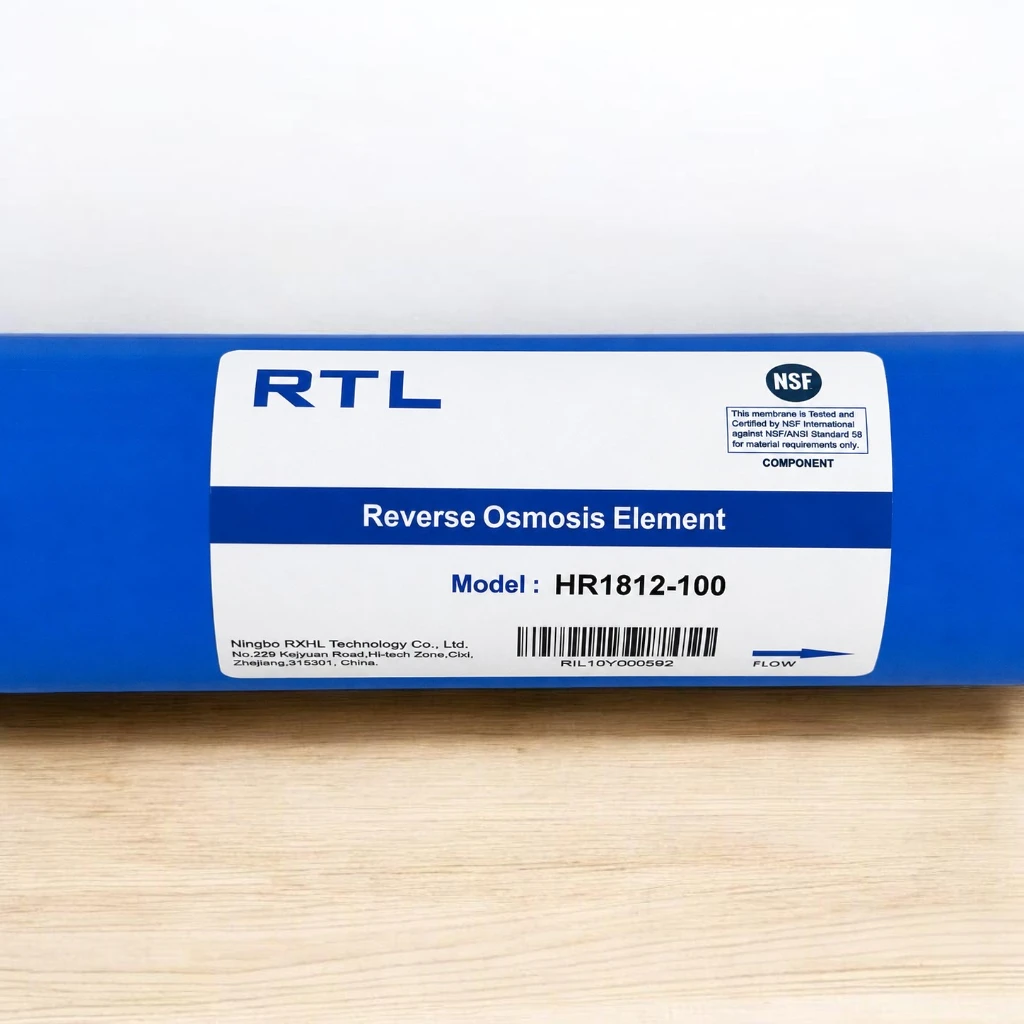
- NSF/ANSI Standard 58 Certified — Independently tested and certified by NSF International for material safety and performance claims. The certification number and NSF logo appear on the product label.
- Thin-Film Composite (TFC) Polyamide Membrane Element — The same membrane technology used in commercial and industrial RO systems, in a domestic 1812-format element. Thin-film composite membranes offer superior rejection and longer service life compared to cellulose acetate membranes.
- Standard 1812 Form Factor — Direct replacement for all standard domestic RO plants with 1812 membrane housings. No adapters or modifications required.
- Professional Manufacturing Standards — RTL (Ningbo RXHL Technology Co., Ltd.) is a China national high-tech enterprise with over 30 patents, NSF certification, and clients including major international water treatment companies.
How to Install the RTL HR1812-100 Membrane
Step 1: Turn off the feed water supply to your RO plant completely. Open the RO faucet to release pressure from the system.
Step 2: Locate the membrane housing — typically the tallest cylindrical canister in your RO unit, positioned after the sediment and carbon pre-filters.
Step 3: Unscrew the membrane housing cap using a membrane housing wrench (included with most RO plants). Pull out the old membrane element and discard.
Step 4: Remove the RTL HR1812-100 from its packaging. Check that the two black O-rings on the end cap are seated correctly.
Step 5: Insert the new membrane into the housing with the flow direction correct — the brine port end goes in first. The 'FLOW' arrow on the RTL label indicates the flow direction.
Step 6: Replace the housing cap and tighten firmly. Restore feed water supply and check for leaks at the housing connections.
Step 7: Flush the new membrane by running the RO system for 30–60 minutes before drinking the output water. Discard this initial flush water — it clears manufacturing preservatives from the membrane.
If you are not confident with RO plant maintenance, Axtron Pakistan offers professional RO membrane replacement service in Multan, Lahore, and other major cities. Contact us for a service visit.
RTL HR1812-100 Technical Specifications
| Specification | Detail |
| Brand | RTL (Ningbo RXHL Technology Co., Ltd.) |
| Model Number | HR1812-100 |
| Series | HR — High Rejection Series for High TDS Water |
| Membrane Type | Thin-Film Composite (TFC) Polyamide |
| Rated Capacity | 100 GPD (Gallons Per Day) / approx. 380 litres per day |
| Salt Rejection Rate | 99% (tested at 500 ppm NaCl, 65 psi, 25°C) |
| Maximum Feed Water TDS | Up to 5000 ppm |
| Element Size (1812) | 1.8 inch diameter × 12 inch length |
| Application | Domestic 100 GPD home RO plants — standard 1812 housing |
| NSF Certification | NSF/ANSI Standard 58 — Tested and Certified by NSF International |
| Manufacturer Location | Ningbo, Zhejiang, China |
| Price | Rs. 4,000 |
| Warranty / Compatibility | All standard 100 GPD domestic RO plants with 1812 housing |
Frequently Asked Questions
Q: How often should I replace my RO membrane?
A: Under normal conditions, an RO membrane should be replaced every 12 to 24 months — typically once a year for Pakistan's high TDS water areas like Multan and Karachi, or every 18–24 months where water quality is better. The most accurate way to know is to test your TDS: if your RO output water is above 50 ppm, or if the rejection rate has dropped below 90% of your original baseline, your membrane needs replacement. Use a TDS meter to monitor output water monthly.
Q: My RO plant is a 100 GPD unit. Will this membrane definitely fit?
A: If your RO plant is rated at 100 GPD and has a standard 1812 membrane housing (most domestic RO plants in Pakistan do), yes — the RTL HR1812-100 is a direct drop-in replacement. If you are unsure, check the label on your existing membrane or the sticker on your RO plant. The '1812' code refers to the element dimensions (1.8 inch × 12 inch), which is the standard for domestic RO units.
Q: Can this membrane handle the very hard water in Multan and southern Punjab?
A: Yes — this is exactly what the RTL HR series is designed for. It is rated for feed water up to 5000 ppm TDS. Typical Multan bore water TDS ranges from 1000–2500 ppm, which is well within the HR1812-100's operating range. The 99% rejection rate remains consistent even at higher TDS feed water, unlike standard membranes which may show declining rejection performance above 1000 ppm.
Q: What is the difference between a standard RO membrane and the RTL HR series?
A: Standard domestic RO membranes are typically designed for feed water TDS of 500–1500 ppm. The RTL HR (High Rejection) series uses a higher-density polyamide thin-film composite that maintains 99% rejection at feed water TDS up to 5000 ppm. This means it lasts longer, performs better, and needs fewer replacements in Pakistan's high TDS water areas compared to cheaper standard membranes.
Q: Does the NSF certification mean the water is safe to drink?
A: NSF/ANSI Standard 58 certification means the membrane material is safe for use in drinking water applications and that performance claims have been independently verified. It is one of the strongest trust indicators for RO membranes globally. It means no harmful substances leach from the membrane material into your water, and that the 99% rejection and 100 GPD performance figures have been tested under standard conditions — not just claimed by the manufacturer.
Q: Do you have other GPD sizes? My RO plant is 75 GPD or 150 GPD.
A: Yes. Axtron Pakistan stocks the full RTL membrane range including 100 GPD, 120 GPD, 200 GPD, 400 GPD sizes. Each size is available with nationwide Cash on Delivery. Browse our complete RO membrane range on the website or contact us to confirm the right size for your system.


Reviews
There are no reviews yet.